
The primary key benefit of UV flatbed technology is its capability to print on a broad array of surfaces. Unlike traditional printers that are confined to paper or thin vinyl, a UV flatbed printer can process hard materials like plexi, wood, metal, glass, and even stone. This opens up a world of opportunities for companies that fabricate niche products. For instance, a small furniture maker can now immediately print detailed designs onto wooden tabletops or drawer fronts excluding the need for costly screen printing setups. Similarly, a signage company can create long-lasting outdoor signs on aluminum composite panels with ease. This material versatility is a breakthrough for short-run production, because it eliminates the requirement for a distinct printing process for each sort of mater
Green-wise, both technologies have undergone major strides. Standard screen printing frequently involves solvent-based inks and aggressive cleaning agents that require particular management procedures. UV printing is widely viewed as more sustainable because UV inks contain minimal emissions. The drying process is immediate, meaning that fewer energy is consumed on evaporating the item. Furthermore, the drop in waste directly corresponds with ethical production standards. For brands looking to enhance their environmental credentials, UV printing provides a compelling case. Obviously, this aspect is becoming progressively vital in current econ
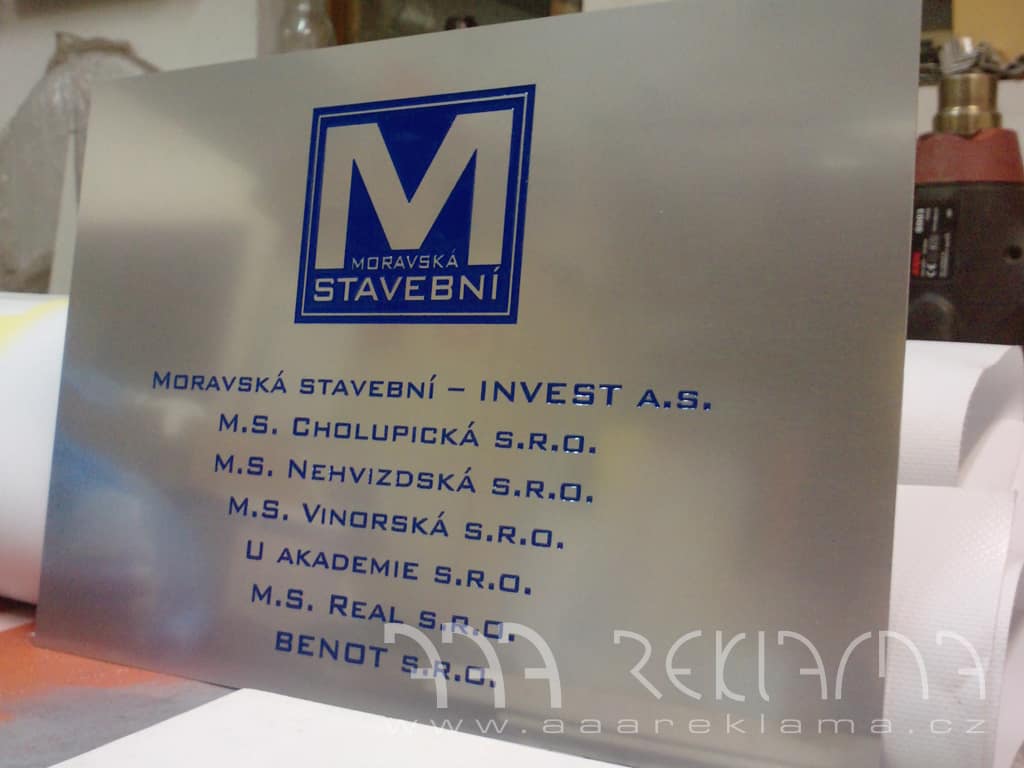 The production sector has consistently been fueled by innovation, and few technologies have exhibited as much adaptability as the UV flatbed printer. These devices are no longer simply tools for graphic design; they have developed into vital components of industrial production processes. Manufacturers across various industries are uncovering that the ability to print instantly onto rigid substrates removes many traditional obstacles. This technology provides a definite advantage in rate, precision, and personalizat
Another critical facet is the instant curing process facilitated by UV radiation. Unlike solvent or water-based inks that set slowly, UV inks are hardened nearly instantly upon contact to ultraviolet light. This means that completed prints can be processed immediately without the danger of smudging or scratching. For production-heavy environments, this swiftness is a major breakthrough. Orders that formerly took hours to cure can now be completed in minutes. Furthermore, because the ink fails to penetrate deeply into the material, the tones stay intense and the definition of intricate lines is superior. This property is especially important for generating life-like images for high-end retail displays or business environments where visual impact is criti
The world of professional signage has undergone a significant shift over the last decade. At the core of this revolution is the rising adoption of UV flatbed printing technology. These printers are not just a modern way to apply ink; they represent a core rethinking of how signs are produced. For firms looking to thrive in a crowded market, grasping this advancement is not any longer optional—it is vital. We will explore how UV flatbed printers are radically reshaping the signage industry, from medium versatility to speed and qual
The manufacturing environment has undergone a dramatic shift over the past era. While standard offset printing and mass production approaches remain dominate high-volume orders, a increasing number of firms are discovering the immense advantage of short-run production. This shift is particularly clear in the realm of custom packaging, signage, and promotional items. At the core of this evolution lies the UV flatbed printer. These devices are certainly not just some other piece of equipment; they embody a fundamental alteration in how businesses approach production flexibility. In this piece, we will examine how UV flatbed printers are facilitating more compact runs with unequaled precis
Moving towards integration, UV printing holds a clear edge. Screen printing demands considerable manual involvement for registration and upkeep. UV printers can be integrated into automated production lines smoothly. Workflow software enables for remote management and control. This extent of digitization lowers human mistakes and raises total efficiency. For diverse shops, this automation is essential. Consequently, UV printing matches ideally with digital factory princip
The standard of detail is at which UV printing really distinguishes itself. Screen printing is limited by the grid count and the actual size of the mask. Fine strokes and tiny text are commonly tough to duplicate consistently. UV printing, utilizing drop-on-demand printhead technology, can attain realistic resolution. Text as small as 3pt can be legible. Complex logos and fades are imaged with impressive precision. For businesses that focus in premium labeling, this standard of detail is non-negotiable. Undoubtedly, the digital nature of UV printing enables for rapid iteration without additional preparation co
Should you loved this short article and you would love to receive much more information with regards to UV Printing For Product Tags kindly visit the webpage.
